A Real-World Example of the Importance of Oxygen Supply Monitoring
Spain, January 1998 – A seriously ill cardiac patient was transferred by ambulance from Hospital San Pedro de Alcántara in Cáceres to Fundación Jiménez Díaz in Madrid. Her medical record prescribed continuous oxygen therapy at 2 L/min.
During the journey, the patient developed breathing difficulties, but oxygen could not be administered because the ambulance oxygen cylinder was empty. Attempts were made to locate another oxygen source, but the patient died before an alternative supply could be provided.
This case illustrates the importance of verifying oxygen availability before transport and continuously monitoring the oxygen supply during the journey. Modern oxygen monitoring and supply-management systems can help medical teams identify low or depleted cylinders earlier and reduce the risk of unexpected oxygen interruptions.
Source: Spanish General Council of Nursing – Civil Liability Case Report
Key Challenges in Ambulance Oxygen Delivery
- Limited Space and Oxygen Storage
Limited onboard oxygen capacity makes cylinder pressure monitoring essential, especially during long transports or high-flow oxygen use.
- Continuous vehicle movement
Vehicle movement and vibrations can affect oxygen cylinders, potentially causing leaks or disconnections. Monitoring systems that alert staff to detect leaks are essential.
- Precise Oxygen Flow Control
Patients may require different oxygen flow rates depending on their clinical needs. Additional components, such as flowmeters and humidifiers, can be incorporated into the oxygen delivery system to meet specific treatment requirements.
- Safety Issues Related to Oxygen Use in Enclosed Spaces
Proper ventilation, fire-resistant materials, and effective leak prevention are essential for reducing fire and explosion risks in ambulances.
Several international standards address ambulance safety and medical oxygen equipment.
- NFPA 1917 includes fire safety requirements for automotive ambulances.
- EN 1789 Addresses road ambulance design, performance, testing, equipment, and the patient compartment.
- ISO 10524-1 Addresses medical gas pressure regulators and certain regulators with flow-metering devices.
How Silbermann supports ambulance oxygen supply management
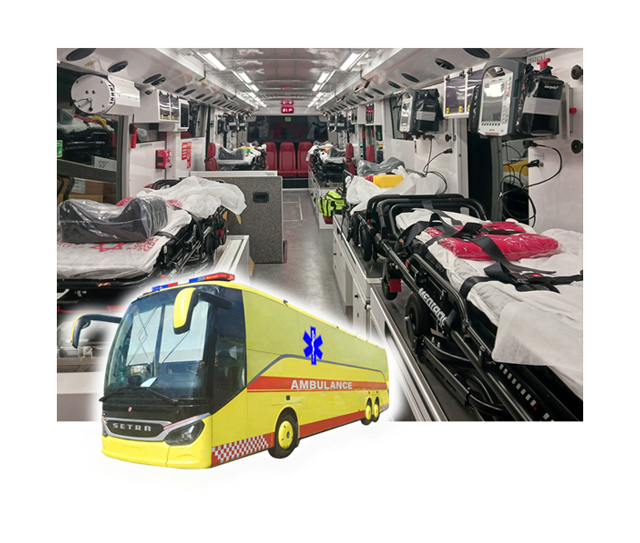
Silbermann’s Oxygen Delivery Systems (ODS) for ambulances are designed to make oxygen supply management easier, safer, and more reliable. From single-cylinder systems to two-cylinder systems with manual or automatic changeover and advanced solutions for multi-stretcher ambulance buses, our systems are designed to meet different ambulance needs.
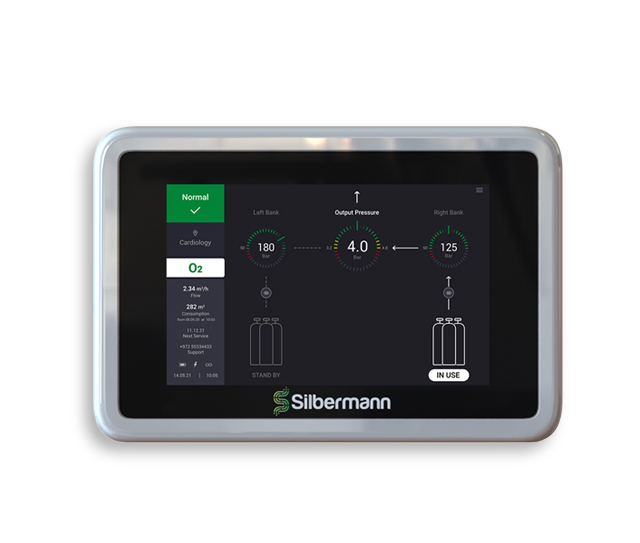
Instead of relying on frequent manual checks of cylinder pressure gauges, medical teams can easily monitor oxygen supply status through a user-friendly touchscreen alarm panel. Real-time information and alerts help staff identify potential problems before they interrupt oxygen delivery, allowing them to focus on what matters most: caring for their patients.
Our goal is simple: to make advanced oxygen monitoring accessible and affordable for ambulance manufacturers, operators, and healthcare providers worldwide. We believe reliable oxygen monitoring should be a basic safety feature, not an expensive luxury.
Monitoring Ambulance Oxygen Supply with Silbermann’s Touchscreen Control Alarm Panel
Here are some of the highlights of this monitoring system:
- 10.1 Touchscreen Alarm Panel
Modern design that allows paramedics and first responders to view the screen data clearly, displaying real-time oxygen system status in both graphical and digital formats.
- Estimated Oxygen Supply Time Remaining
Based on cylinder status and preset flow-rate parameters, the system can calculate the estimated oxygen supply time remaining in minutes, helping personnel manage the limited onboard oxygen supply.
- Visual and Audible Pressure Alarms
Visual and audible alarms alert medical personnel to predefined low-pressure conditions, including conditions associated with cylinder changeover.
- Active and Standby Source Status (Available for systems with two or more oxygen cylinders)
The touchscreen graphically and digitally displays the status of each oxygen source as “In Use” or “Standby”, allowing personnel to quickly identify which cylinder is supplying the system.
- Leak detection alert from cylinders (Available for systems with two or more oxygen cylinders)
The system continuously monitors the pressure in both oxygen cylinders, helping detect abnormal pressure drops in the standby cylinder even when it is not actively supplying oxygen.
- Gas expiration date alert: An alert for the medical gas cylinder expiration date.
- Alarm and Maintenance History: Changes in alarm conditions and periodic maintenance events can be recorded and displayed in the system’s log history, providing a record of monitored events.
- Advanced Communication: Enabling remote monitoring from computers and cell phones.
- Customizable text & language to support different regions and countries
Summery
Managing oxygen supplies in ambulances presents unique challenges, from limited cylinder capacity to the need for continuous monitoring during patient transport.
Silbermann’s Oxygen Delivery Systems help medical teams monitor oxygen availability, receive timely alerts, and identify potential supply problems before they interrupt oxygen delivery.
With user-friendly touchscreen technology and cost-effective solutions for different ambulance configurations, advanced oxygen monitoring becomes a practical safety improvement without requiring a major investment.
Reliable oxygen monitoring should be a basic safety feature, not an expensive luxury.
For more information about Silbermann’s Ambulance Oxygen Delivery Systems, contact us at info@silbermnn.com